
Last updated: November 2026 | Educational information, not medical advice
Medical disclaimer: This article is for general information and education only — it is NOT medical advice. IBS can share symptoms with more serious conditions, so never self-diagnose or self-treat. Always see a qualified doctor for diagnosis and a treatment plan suited to you.
Irritable bowel syndrome (IBS) is one of the most common digestive problems in the world, affecting roughly one in ten people — yet it is still widely misunderstood. If you have ongoing belly pain, bloating, and unpredictable bowel habits, this guide explains what IBS is, why it happens, and how it is managed.
Here you will find a clear, doctor-informed overview of irritable bowel syndrome for 2026: its types, symptoms, causes, the warning signs that need urgent medical attention, how it is diagnosed, and evidence-based ways to find relief. All information is based on current clinical sources as of November 2026.
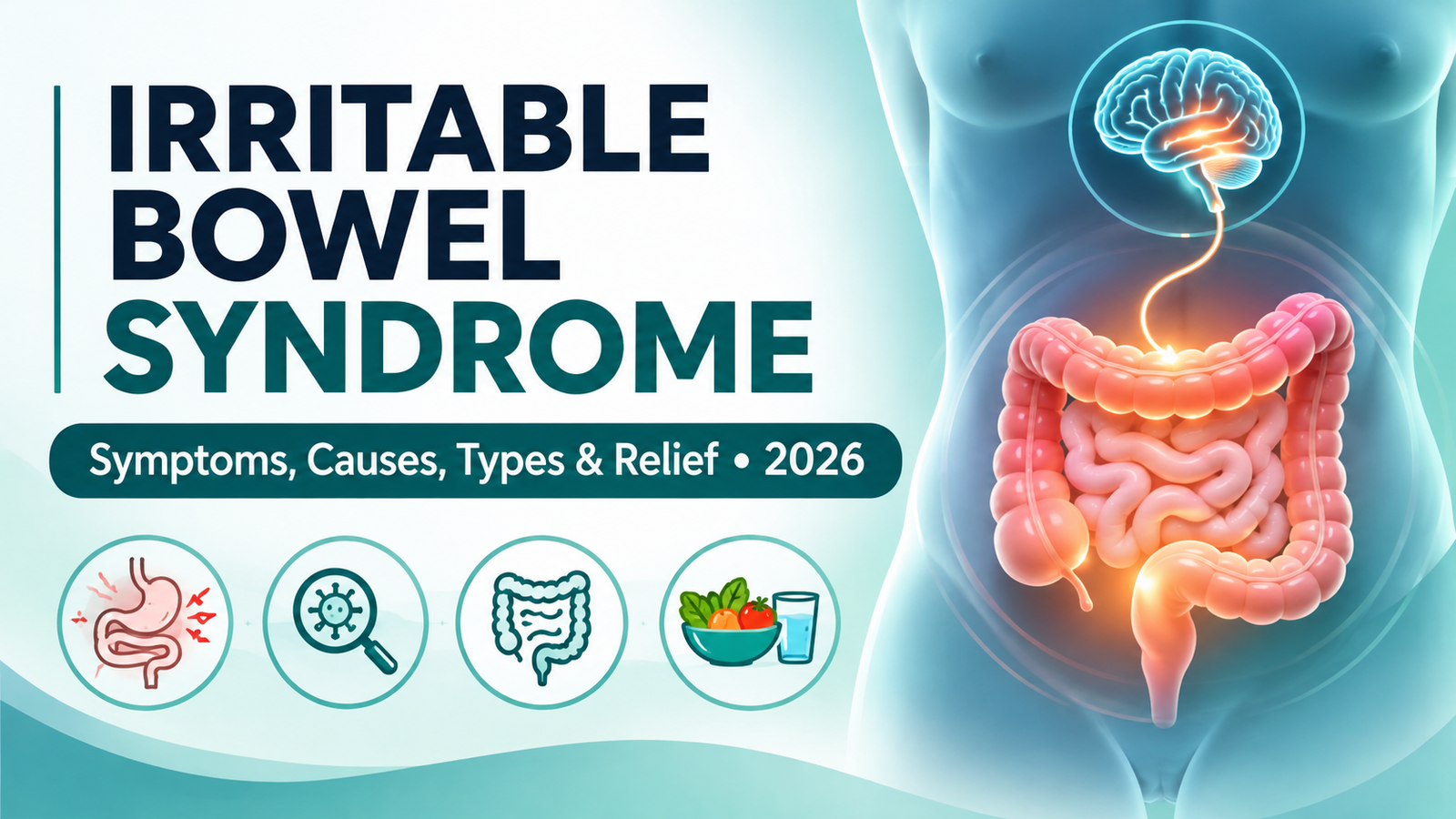
Irritable bowel syndrome: quick facts
| Point | Detail |
|---|---|
| What it is | A chronic functional bowel disorder (no visible bowel damage) |
| How common | Around 10% of people worldwide |
| Who | More common in women and younger adults |
| Main symptoms | Belly pain, bloating, and changed bowel habits |
| Types | IBS-C, IBS-D, IBS-M, IBS-U |
| Cause | Multiple factors, including the gut–brain connection |
| Is it dangerous? | Not life-threatening, but it can greatly affect daily life |
What is irritable bowel syndrome?
Irritable bowel syndrome is a chronic condition marked by recurring abdominal pain or discomfort along with changes in bowel habits. It is called a ‘functional’ disorder because the gut does not work normally even though there is no visible damage, inflammation, or disease on tests.
IBS is real and common — it affects about 10% of people worldwide, more often women and younger adults. It is not dangerous or life-threatening, but it can seriously affect quality of life, work, and wellbeing. The good news is that, once diagnosed, it can usually be managed well.
Types of irritable bowel syndrome
IBS is grouped into subtypes based on your main bowel pattern. Knowing your type helps guide treatment.
| Type | Main pattern |
|---|---|
| IBS-C | Constipation-predominant (hard, infrequent stools) |
| IBS-D | Diarrhoea-predominant (loose, frequent stools) |
| IBS-M | Mixed — both constipation and diarrhoea |
| IBS-U | Unclassified — doesn’t fit the other patterns |
Your type can change over time, so management is tailored to your current main symptom.
Symptoms of IBS
The core symptoms of irritable bowel syndrome include:
- Recurring abdominal pain or cramping, often eased or changed by a bowel movement.
- A change in how often you pass stools (more or less than usual).
- A change in stool appearance (harder, looser, or varying).
- Bloating and excess gas.
- A feeling of incomplete emptying, or urgency.
Symptoms often come and go, and can be triggered by certain foods, stress, hormonal changes, or illness. Many people notice flare-ups during stressful periods.
What causes irritable bowel syndrome?
IBS does not have a single cause. Researchers believe several factors work together, with the gut–brain connection at the centre.
- The gut–brain axis: the gut and brain constantly communicate. In IBS, this two-way signalling becomes oversensitive, so normal gut activity can feel painful.
- After a gut infection: some people develop IBS following a bout of gastroenteritis (post-infectious IBS).
- Stress, anxiety, and low mood: these do not ’cause IBS in your head’, but they can genuinely trigger and worsen physical symptoms.
- Gut bacteria and gut lining: changes in gut microbes, a more permeable gut lining, and low-grade sensitivity of gut nerves may play a role.
- Other factors: serotonin and hormone signalling, difficult early-life experiences, and a genetic tendency can all contribute.
An important reassurance: IBS being linked to stress does NOT mean it is ‘all in your head’ or imaginary. The pain and symptoms are real and physical — the brain–gut connection is a genuine biological pathway.
Red-flag symptoms: when to see a doctor urgently
IBS itself is not dangerous, but some symptoms are NOT typical of IBS and could point to a more serious condition. See a doctor promptly if you have any of these warning signs:
Do not ignore these — get medical help: Blood in your stool; unexplained weight loss; diarrhoea that wakes you at night; iron-deficiency anaemia; new bowel symptoms starting after age 50; a family history of bowel (colorectal) cancer or inflammatory bowel disease; or difficulty swallowing.
These ‘alarm features’ need proper medical assessment, which may include tests such as a colonoscopy, to rule out other conditions. Never assume ongoing new symptoms are ‘just IBS’ without seeing a doctor.
How is IBS diagnosed?
There is no single test for IBS. Doctors make a ‘positive diagnosis’ based on your symptom pattern and the absence of alarm features, rather than running endless tests.
A widely used standard is the Rome IV criteria, which looks for recurrent abdominal pain on average at least one day a week over the past three months (with symptoms starting at least six months earlier), linked to two or more of: bowel movements, a change in stool frequency, or a change in stool appearance.
Your doctor may do a few basic tests to exclude other causes, but if your pattern fits IBS and you have no warning signs, extensive testing is usually unnecessary — and this approach is safe and cost-effective.
How to find relief from IBS
IBS is managed, not ‘cured’, but most people find real relief by combining diet, lifestyle, and — when needed — medical treatment chosen by their doctor. Treatment is tailored to your main symptoms.
Diet
Diet is one of the most effective tools. A low FODMAP diet — which temporarily reduces certain fermentable carbohydrates — has good evidence for easing symptoms and bloating. Important: it is a structured, three-phase, temporary process (restrict, then reintroduce, then personalise), and it works best under the guidance of a registered dietitian. It is not meant to be a permanent, highly restrictive diet, and going it alone can backfire.
Keeping a simple food-and-symptom diary can also help you and your doctor spot personal triggers.
Fibre
Soluble fibre (for example, psyllium) may help overall symptoms. Insoluble fibre such as wheat bran has not been shown to help and can worsen bloating for some people. Increase fibre slowly and with plenty of water.
Lifestyle and stress
- Regular, gentle activity — walking, yoga, or cycling — can ease symptoms. Very strenuous exercise is less helpful.
- Managing stress matters, because of the gut–brain link. Relaxation, good sleep, and routine help.
- Gut-directed psychological therapies (such as gut-focused CBT or hypnotherapy) genuinely help some people, especially when symptoms are persistent.
Medications (decided by your doctor)
When diet and lifestyle are not enough, doctors can prescribe treatments aimed at your main symptom. These are general categories only — the right choice, and any dose, must come from your doctor:
- For constipation (IBS-C): certain laxatives and specific prescription medicines.
- For diarrhoea (IBS-D): anti-diarrhoeal medicines and, in some cases, specific prescription options.
- For pain and cramping: antispasmodics, and sometimes low-dose medicines that calm gut nerve signals.
- Other options your doctor may consider include certain antibiotics for specific cases and probiotics.
Please note: This article does not give medicine names for self-use or any doses on purpose. IBS medicines must be chosen and dosed by a doctor who knows your full history. Self-medicating can be unsafe.
Living well with irritable bowel syndrome
IBS is a long-term condition, but it does not have to control your life. Most people manage it well with the right plan.
- Work with a doctor (and ideally a dietitian) rather than trying endless remedies alone.
- Identify and gently manage your personal food and stress triggers.
- Be patient — finding what works can take some trial and adjustment.
- Look after your mental wellbeing; it is a real part of gut health, not a weakness.
Frequently asked questions about irritable bowel syndrome
Q: What is irritable bowel syndrome in simple terms?
A: IBS is a common, long-term condition where the gut is oversensitive, causing recurring belly pain, bloating, and changes in bowel habits (constipation, diarrhoea, or both) — without any visible damage to the bowel. It is real and manageable, not dangerous.
Q: What are the main symptoms of IBS?
A: Recurring abdominal pain or cramping (often linked to bowel movements), bloating and gas, and changes in how often or how your stools appear. Symptoms tend to come and go and can be triggered by food or stress.
Q: What causes IBS?
A: There is no single cause. It involves an oversensitive gut–brain connection, sometimes a previous gut infection, stress and mood, changes in gut bacteria and the gut lining, and genetic factors. Stress worsens it but does not make the symptoms imaginary.
Q: What foods should I avoid with IBS?
A: Triggers vary from person to person. A low FODMAP diet, done temporarily and with a dietitian’s guidance, helps many people identify their triggers. It is a structured three-phase process, not a permanent restrictive diet — avoid cutting out foods long-term without professional advice.
Q: When should I see a doctor about bowel symptoms?
A: See a doctor promptly for any ‘red flags’: blood in stool, unexplained weight loss, diarrhoea that wakes you at night, anaemia, new symptoms after age 50, or a family history of bowel cancer. Never assume new, ongoing symptoms are ‘just IBS’.
Q: Can IBS be cured?
A: IBS cannot be permanently cured, but it can be managed very effectively. Most people get good relief through a combination of diet, lifestyle changes, stress management, and — when needed — medication prescribed by a doctor.
The bottom line
Irritable bowel syndrome is common, real, and manageable. It is not dangerous in itself, but because its symptoms can overlap with more serious conditions, the first step is always a proper diagnosis from a doctor. From there, a mix of diet (often low FODMAP with a dietitian), gentle exercise, stress management, and — if needed — doctor-prescribed medication helps most people live well.
If you think you have IBS, do not just cope or self-treat — see a doctor, rule out warning signs, and build a plan that works for you.
Final medical disclaimer: This article is educational and not a substitute for professional medical advice, diagnosis, or treatment. Symptoms vary, and some need urgent care. Always consult a qualified doctor about your own health before making changes.
Information in this guide is based on current clinical sources, including the 2025 Seoul Consensus IBS guideline and Rome IV criteria, verified in November 2026. Medical understanding evolves — always confirm with a healthcare professional.
Related reading on Noteskarts
Trusted source (external)
NIDDK (US National Institutes of Health) — IBS — authoritative patient information

